Dead Stick Pond
Blood ShotDead Stick Pond is a remnant wetland in South Chicago, set among marsh, landfill, and factories near the Calumet River. Once a resting and feeding ground for migratory birds, it has been badly contaminated by industrial waste. In the novel, the pond is not a remote wilderness apart from the city but part of its damaged industrial landscape: a place where pollution has altered the life of the water and where violence can be concealed among refuse and abandoned ground. Nancy Cleghorn’s death and V. I. Warshawski’s later ordeal there make the wetland a recurring site where environmental neglect and human danger converge.
Setting and Ecological Condition
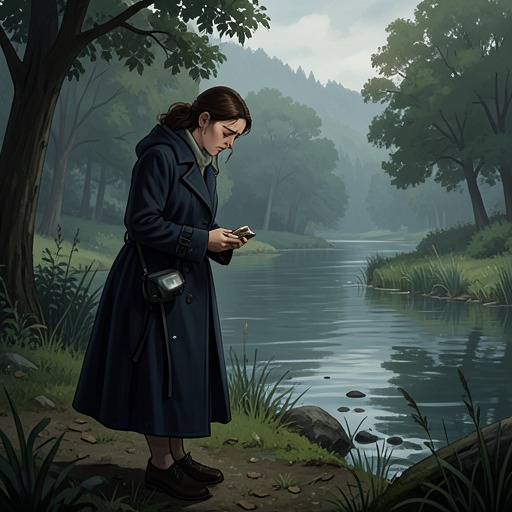
Dead Stick Pond lies within a difficult-to-navigate area of marsh, landfill, and factories. Warshawski reaches it by following Stony Island from 103rd Street; south of the major thoroughfare, the road becomes a rough track worn into potholes by trucks entering and leaving the factories. Rain turns the route muddy and treacherous. The landscape is therefore tied to industrial traffic as well as to the wetland: access to the pond runs through the same working terrain that has helped make the surrounding environment hazardous.
The pond forms part of an overflow of the Calumet River. Its water is shallow but spreads across a broad area of marsh. Signs at the site give conflicting messages: one identifies a federal clean-water project, while another warns of hazardous wastes. A low wire fence, apparently intended to enclose the area, has fallen in several places. The gap between official designation and physical condition is plain. A protective boundary exists in name and in fragments, but does little to prevent entry or make the site safe.
The pond’s past and present are sharply contrasted. It once supported migrating birds; its water is now described as dull black, with bare tree stumps rising from it. Although fish have returned to the Calumet River and its tributaries since the Clean Water Act, fish entering the pond show severe disease, including tumors and rotted fins. People still fish there, despite the polluted water. The surviving signs of wildlife do not cancel the damage; they make the contamination visible as a continuing condition rather than a completed disaster.
Nancy Cleghorn’s Death
Dead Stick Pond first becomes central to the investigation when Nancy Cleghorn’s body is discovered there. Two boys who had entered the posted area in hopes of seeing a muskrat find a discarded boot at the water’s edge. Because discarded footwear is common in the area, they do not immediately recognize that a body is connected to it. Their discovery turns the wetland’s accumulated rubbish into part of the circumstances through which a death is encountered.
The newspaper report says Nancy had been struck on the back of the head and apparently drowned after being left in the pond. She had been found the previous evening, and the police initially knew of no one with a reason to kill her. The report also identifies her as a respected worker at SCRAP, whose environmental work had earned recognition in the troubled community. The contrast is significant: the place where she is found is itself evidence of environmental neglect, while her work had been directed toward the community’s future and its surroundings.
Warshawski returns to the site after reading the report. At the southern end, she finds the area still marked with police tape and signs identifying it as an active investigation scene, but no officer is present. Rain has washed away traces the evidence team did not collect. Stones mark the outline of the place where Nancy lay; the newspaper and the scene indicate that she had been left partly in the water. The location provides no clear, recoverable clue to the killer. Instead, the scattered bottles, food wrappers, shoes, and discarded clothing around it make the crime scene seem continuous with the broader landscape of abandonment.
Warshawski’s Investigation and Attack
Warshawski’s return is also an attempt to understand how Nancy was brought to the pond and what the site might reveal. She imagines the route taken by the killers: they may have parked near the road and carried Nancy along the same path she has just walked, passing the area where a fishing couple stood. The couple’s presence makes the dumping seem possible in daylight, but also exposes how little the presence of other people guarantees observation. The remote, neglected setting can shield violence not through isolation alone, but through the ordinary indifference and limited visibility of the place.
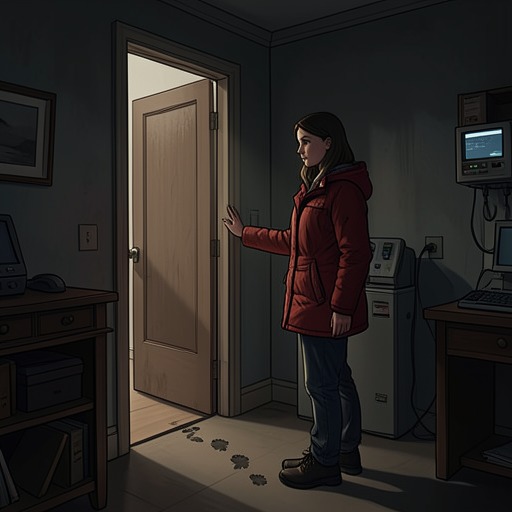
The pond’s association with the investigation soon becomes personal. After being attacked, Warshawski is taken there and left in the marsh, bound and unable to stand. The attack echoes the method by which Nancy was abandoned, making the location more than the setting of an earlier crime: it becomes a repeated threat directed at someone pursuing the truth. Warshawski tries to orient herself and inch toward the road, using the position of the water to work out which way to move. The marsh makes escape difficult, but her effort to navigate it also marks her refusal to remain where her attackers left her.
The two episodes connect Nancy’s murder to the danger facing the investigation without, by themselves, identifying who ordered either attack. Later, Warshawski tells Gustav Humboldt that the men who dumped her at Dead Stick Pond are in custody and may reveal who hired them. The pond thus functions as a place where hidden violence leaves consequences beyond the immediate scene: the effort to silence an investigator instead becomes part of what she can confront.
Narrative and Thematic Significance
Dead Stick Pond brings the novel’s environmental and investigative strands into the same physical space. Its contaminated water is not an abstract symbol detached from local life: the site remains accessible, fishing continues, and birds and other animals still appear among industrial ruins. Yet the signs of life exist alongside evidence of harm. The wetland’s compromised ecology makes the community’s exposure to pollution difficult to separate from the broader patterns of disinvestment surrounding it.
The setting also unsettles the idea of a clean boundary between nature and the city. The pond is a wetland, a federal clean-water project, a hazardous-waste warning, a place beside working factories, and a dumping ground marked by discarded objects. These descriptions coexist rather than resolving into one stable identity. The collapsed fence makes that contradiction material: an attempted enclosure fails, leaving the wetland open to trespass, contamination, and concealment.
Finally, the site changes meaning through recurrence. It is first encountered through a newspaper account of Nancy’s death, then revisited as a police-marked scene, and later becomes the place where Warshawski is left in danger. The same marsh that figures as an injured habitat is also made to hold human evidence and threat. Its significance lies in that convergence: Dead Stick Pond shows how a damaged landscape can absorb violence, hide what powerful actors would rather keep unseen, and still become a point from which an investigation moves forward.